




What is Mindfulness?
Mindfulness is being purposefully aware, without judgment, of what is happening in your mind, body, and environment in the present moment. Mindfulness is both a mental state and a practice where one pays attention on purpose. In a nutshell, mindfulness is intentional awareness.
Through different types of mindfulness practice, we can develop a moment-to-moment awareness of ourselves and our environment, a sense of decreased stress and anxiety, and a greater understanding of ease and well-being. There is always some element of mindfulness present at any moment—if you are aware, you are mindful. However, true mindfulness comes when one is both aware and unattached to what is present in their mind, body, and surroundings. This is referred to as the “egoless awareness” of mindfulness.
Why Do We Need Mindfulness?
Often, we become attached to our thoughts and feelings and assume they are completely accurate. We may also carry negative beliefs that originated much earlier in life—perhaps through a parent, partner, or an unhealthy or abusive relationship. Over time, we can internalize these messages and accept them as truths about ourselves.
Mindfulness and Buddhist psychology can help us recognize these patterns and develop a healthier relationship with our thoughts, emotions, and beliefs. With the support of a safe therapist, along with meditation and mindfulness practices, we can learn to observe our emotions without being controlled by them.
Becoming the Observer
Think of yourself as a body of water—a quiet pond. Your emotions are like fish swimming through it. There are many fish and many emotions, from joy and happiness to sadness, fear, and anger. Your job is not to chase the fish or make them disappear. Your job is to become still enough to notice them.
- Mindfulness teaches us to become the silent observer of our emotions—to recognize what we are feeling without immediately creating negative stories about ourselves, another person, or the situation.
- Meditation, contemplative prayer, and mindfulness can help us become less reactive and respond to difficult situations in healthier, more intentional ways.
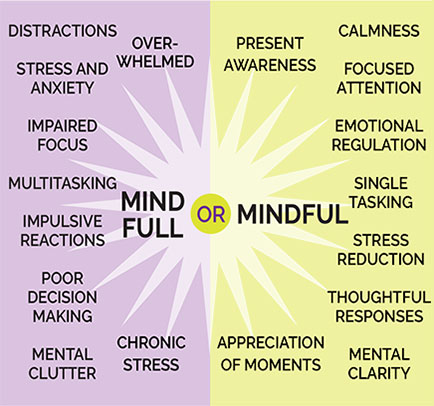
What are the benefits of mindfulness?
Research suggests that regular mindfulness practice may:
- help reduce stress and anxiety
- improve emotional regulation and sleep, and
- support overall psychological well-being.
- It can also help us recognize habitual thought patterns and make healthier, more intentional choices.
How can I practice mindfulness?
Mindfulness can take many forms, including:
- seated or walking meditation
- a simple three-breath pause
- mindful movement or eating,
- contemplative prayer,
- journaling, or
- simply noticing what’s happening in your body & mind without judgment.
The practice does not have to be complicated. Even a few intentional moments of awareness can be a place to begin.
Who Can Benefit From Mindfulness?
Mindfulness is not limited to people who practice Buddhism or follow a particular spiritual tradition. Almost anyone can benefit from learning to become more aware of their thoughts, emotions, and reactions.
For people struggling with anxiety, difficult emotions, negative self-beliefs, unhealthy relationships, or painful past experiences, mindfulness can be a valuable tool for healing and personal growth.
Want to learn more?
In therapy, I can help you develop mindfulness practices in a safe and supportive environment and explore how they can become part of your individual journey toward emotional well-being and healing.
Please call me and come into therapy, for support in starting your journey to emotional wellbeing and mindfulness.