





Helping You Process Difficult Experiences
and Move Forward
Eye Movement Desensitization and Reprocessing (EMDR) is a psychotherapy approach designed to help people process traumatic memories and other distressing life experiences. EMDR is best known for treating post-traumatic stress disorder (PTSD), but therapists may also use it to address anxiety, panic, phobias, grief, and other difficulties connected to painful or overwhelming experiences.
Unlike some forms of talk therapy, EMDR does not require you to describe a traumatic experience in extensive detail. Instead, therapy focuses on the memories, emotions, physical sensations, and beliefs associated with the experience and helps reduce the distress they continue to cause.
Why Is EMDR Used?
Sometimes a disturbing or traumatic experience continues to affect us long after the event itself has passed. A memory may trigger fear, anxiety, shame, anger, or physical reactions that can feel as immediate as when the experience first occurred.
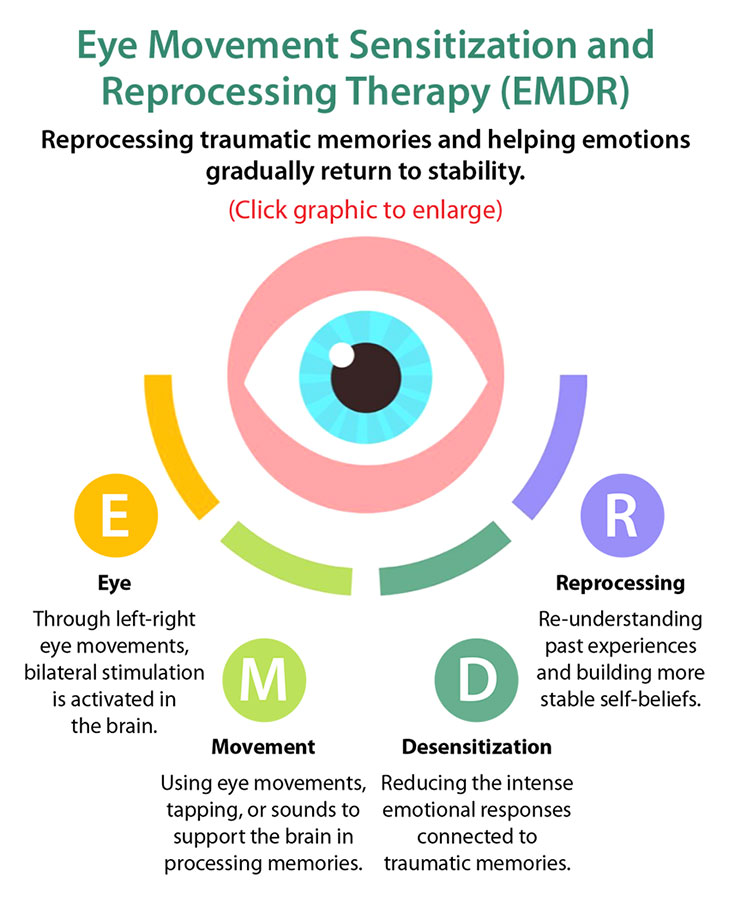
EMDR is designed to help the brain process these distressing memories so they become less emotionally disruptive. The goal is not to erase the memory, but to reduce its emotional intensity and help you relate to the experience in a healthier, more adaptive way.
How Does EMDR Work?
During EMDR therapy, you briefly focus on a troubling memory or experience while engaging in bilateral stimulation—rhythmic stimulation that alternates from one side of the body to the other.
This may involve:
- Following the therapist’s fingers or a moving light with your eyes
- Listening to alternating sounds through headphones
- Alternating gentle taps or other forms of bilateral stimulation
Throughout the process, you remain aware of the present while recalling aspects of the past experience. This combination of memory recall and bilateral stimulation is used to facilitate reprocessing and reduce the distress associated with the memory.
Over time, memories that once felt overwhelming may become less emotionally charged and easier to think about without experiencing the same level of distress.
What Can EMDR Help With?
EMDR is most widely recognized for the treatment of trauma and PTSD, and it may also be incorporated into therapy for people experiencing:
- Trauma and post-traumatic stress
- Anxiety and panic
- Phobias and fears
- Distressing or intrusive memories
- Grief and loss
- Stress related to difficult life experiences
- Negative beliefs connected to past experiences
- Some forms of depression and emotional distress
Whether EMDR is appropriate depends on each person’s experiences, needs, and treatment goals. Your therapist can help determine whether EMDR may be a useful part of your individual counseling plan.