




Helping You Process Difficult Experiences
and Move Forward
Somatic therapy explores how the body expresses deeply painful experiences, applying mind-body healing to aid with trauma recovery.
Somatic therapy is grounded in the belief that our bodies are not just vessels for physical experiences but also repositories for emotional and psychological ones. Every joy, stress, or trauma we experience leaves an imprint—not only in our minds but in our physical selves. This is why emotions like fear or sadness can often manifest as a tight chest, a clenched jaw, or a tense stomach. While we might dismiss these sensations as temporary, somatic therapy recognizes them as vital clues to understanding deeper emotional and psychological patterns.
One of the foundational principles of somatic therapy is that the body “remembers.” Trauma, for example, is not always stored as a coherent memory in the mind but is often encoded in the body as tension, pain, or disrupted physiological responses. These physical imprints can linger long after the mind has moved on, manifesting as chronic muscle tension, unexplained pain, digestive issues, or even a sense of disconnect from one’s body.
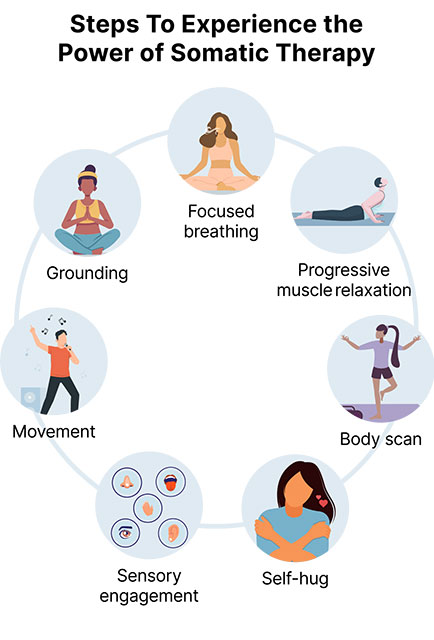
Somatic therapy also emphasizes the concept of self-regulation. This involves learning how to respond to the body’s signals in a way that pro- motes calm and balance. For instance, through practices like grounding exercises or deep breathing, clients can learn to manage their body’s re- sponses to stress or anxiety, helping them feel more present and in control.
Ultimately, somatic therapy is about reconnection.
Reconnection with the body, with the emotions it holds, and with the innate capacity for healing that resides within all of us. By acknowledging and working with the body’s wisdom, somatic therapy offers a transformative path to healing that feels both practical and deeply restorative.
How does somatic therapy differ from talk therapies?
Typical talk therapies such as CBT engage only the mind, not the body, encouraging people to become aware of disturbing thoughts and behavior patterns and work to change them.
Who might benefit from somatic therapy?
Since disturbing feelings often show up in the body in debilitating ways, somatic therapy aims to drain those emotions of their power, relieving pain and other manifestations of stress, such as disrupted sleep or an inability to concentrate.
These types of emotions can stem from a variety of conditions and circumstances that somatic therapy may potentially help alleviate. They include:
- Post-traumatic stress disorder (PTSD)
- Complicated grief
- Depression
- Anxiety
- Trust and intimacy issues
- Self-esteem problems